


The retina is one of the most intricate and vital structures in the human eye. Positioned at the back of the eye, it functions like the film in a camera — capturing light and converting it into electrical signals that the brain interprets as images. When the retina is compromised, even slightly, the consequences for vision can be swift and severe. Yet many people remain unaware of how vulnerable this tissue is, or how quickly conditions affecting it can progress without proper medical attention.
Retinal disorders encompass a wide range of conditions, from diabetic retinopathy and macular degeneration to retinal detachment and vascular occlusions. Each of these conditions carries its own risk profile, progression timeline, and treatment approach. What they share in common is the need for early detection and specialist-level care. General ophthalmologists provide essential eye care, but retinal diseases often require the expertise of a subspecialist trained specifically in diagnosing and treating disorders of the retina and vitreous.
Common Warning Signs That Should Not Be Ignored
Many retinal conditions develop silently in their early stages, which is precisely what makes them so dangerous. By the time symptoms become noticeable, significant damage may already have occurred. That said, there are several warning signs that should prompt an immediate consultation with a specialist.
Sudden Floaters or Flashes of Light
A sudden increase in floaters — those small specks or cobweb-like shapes drifting across your field of vision — or the appearance of flashing lights can indicate a posterior vitreous detachment or, more seriously, a retinal tear or detachment. While occasional floaters are common and benign, a dramatic change in their frequency or appearance warrants urgent evaluation. Retinal detachment, in particular, is a medical emergency that can lead to permanent vision loss if not treated within hours to days.
Blurred or Distorted Central Vision
Distortion of straight lines, difficulty reading, or a blurred patch in the center of your vision may suggest macular disease, including age-related macular degeneration (AMD) or diabetic macular edema. The macula is the central portion of the retina responsible for sharp, detailed vision. Any disruption to this area directly impacts tasks like reading, driving, and recognizing faces.
Gradual Loss of Peripheral Vision
A slow narrowing of the visual field, sometimes described as tunnel vision, can be a sign of retinitis pigmentosa or other progressive retinal dystrophies. These conditions are often hereditary and may begin in childhood or adolescence, though they can go undiagnosed for years without a comprehensive retinal examination.
The Importance of a Thorough Clinical Evaluation
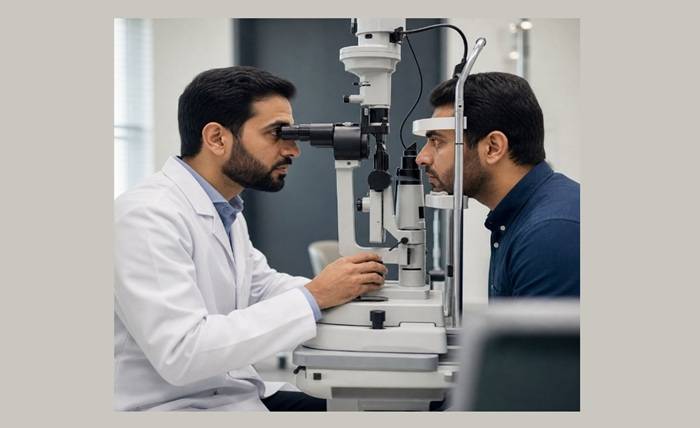
When a patient presents with visual symptoms, the diagnostic process involves far more than a simple vision test. A retina specialist will conduct a detailed dilated fundus examination, often supplemented by advanced imaging technologies such as optical coherence tomography (OCT), fluorescein angiography, and fundus photography. These tools allow the physician to visualize the layers of the retina with extraordinary precision, identifying subtle changes that would otherwise be invisible to the naked eye.
Understanding the full scope of a patient’s medical history is equally critical. Conditions such as diabetes, hypertension, and autoimmune disorders can all have significant implications for retinal health. A structured approach to history-taking and physical examination ensures that no contributing factor is overlooked, enabling the specialist to form an accurate diagnosis and develop an appropriate treatment plan.
Diabetic Eye Disease: A Growing Concern
Among the most prevalent causes of preventable blindness worldwide, diabetic retinopathy affects a significant proportion of individuals living with type 1 or type 2 diabetes. Chronically elevated blood sugar levels damage the tiny blood vessels that supply the retina, causing them to leak, swell, or grow abnormally. In advanced stages, new fragile blood vessels can form across the retina and vitreous, dramatically increasing the risk of hemorrhage and vision loss.
The insidious nature of diabetic retinopathy lies in its lack of early symptoms. Patients may have no visual complaints until the disease has reached a proliferative stage. This is why annual dilated eye examinations are considered a standard of care for anyone with diabetes. Early intervention — whether through laser treatment, intravitreal injections, or surgical procedures — can preserve vision and slow disease progression considerably.
Navigating Retinal Care in a Multilingual Healthcare Environment
For patients seeking retinal care in diverse, multicultural cities, communication plays a pivotal role in the quality of care received. Misunderstandings about symptoms, treatment options, or follow-up instructions can have serious consequences when dealing with a condition as time-sensitive as retinal disease. Healthcare providers and patients alike benefit from systems and resources that prioritize clear, accessible communication. Breaking language barriers in healthcare is not merely a logistical concern — it is a patient safety imperative that directly influences outcomes in complex specialties like retinal medicine.
Expert Retinal Care at Cleveland Clinic Abu Dhabi
For residents and visitors in the UAE seeking subspecialty-level eye care, access to internationally trained retinal specialists is now available locally. Cleveland Clinic Abu Dhabi’s program for diabetic eye disease and retinal disorders brings together a multidisciplinary team with deep expertise in diagnosing and managing the full spectrum of retinal conditions. Patients benefit from state-of-the-art diagnostic imaging, evidence-based treatment protocols, and a patient-centered approach that mirrors the standards of one of the world’s most respected healthcare institutions.
Whether you are managing a chronic condition like diabetic retinopathy or experiencing sudden changes in your vision, consulting a retina specialist abu dhabi at Cleveland Clinic Abu Dhabi ensures that your care is guided by the latest clinical evidence and delivered with precision and compassion. The team is equipped to handle both routine monitoring and complex surgical interventions, offering continuity of care from initial diagnosis through long-term management.
What Happens During Your First Retinal Consultation
Patients often arrive at their first retinal appointment uncertain about what to expect. The visit typically begins with a comprehensive review of medical and ocular history, followed by a series of vision tests and a dilated fundus examination. Depending on the findings, additional imaging studies may be ordered on the same day. The specialist will then discuss the results in detail, explaining the diagnosis, the likely progression of the condition, and the available treatment options.
It is important for patients to come prepared with a list of current medications, a summary of relevant medical conditions, and any prior eye examination records. Wearing sunglasses after the appointment is advisable, as pupil dilation can cause light sensitivity and blurred near vision for several hours.
Conclusion: Prioritizing Retinal Health Before Symptoms Appear
Retinal disease does not always announce itself with dramatic symptoms. In many cases, the window for effective intervention is narrow, and the difference between preserved vision and irreversible loss can come down to the timing of a single appointment. Whether you have a known risk factor such as diabetes or a family history of retinal disease, or simply want the reassurance of a thorough examination, proactive retinal care is one of the most meaningful investments you can make in your long-term quality of life. Do not wait for vision changes to seek evaluation — by then, the conversation may have shifted from prevention to damage control.